Header background

On the 8th Day

"וּבַיּוֹם הַשְּׁמִינִי" — Exploring the sources, meanings, and beautiful customs of Bris Milah.

📜
Origins & Sources

Why the 8th Day? The Mystery of the Number Eight

The Torah commands that Bris Milah be performed on the eighth day of a boy's life, even if that day falls on Shabbat. But why specifically the eighth? The Maharal of Prague explains that the number seven represents the natural world — the seven days of Creation — while eight transcends nature, representing the eternal covenant between God and the Jewish people that stands above the natural order.

The Zohar (Lech Lecha) adds that the eight-day requirement ensures the infant experiences at least one Shabbat before the Bris, imbuing him with the sanctity of Shabbat before entering the covenant. This is not merely poetic — it is halachically codified in the Shulchan Aruch (Yoreh De'ah 262:1).

Sources:

Vayikra 12:3 · Talmud Bavli, Shabbat 134b · Maharal, Gevurot Hashem · Shulchan Aruch Y.D. 262:1

🍷
Ceremony & Ritual

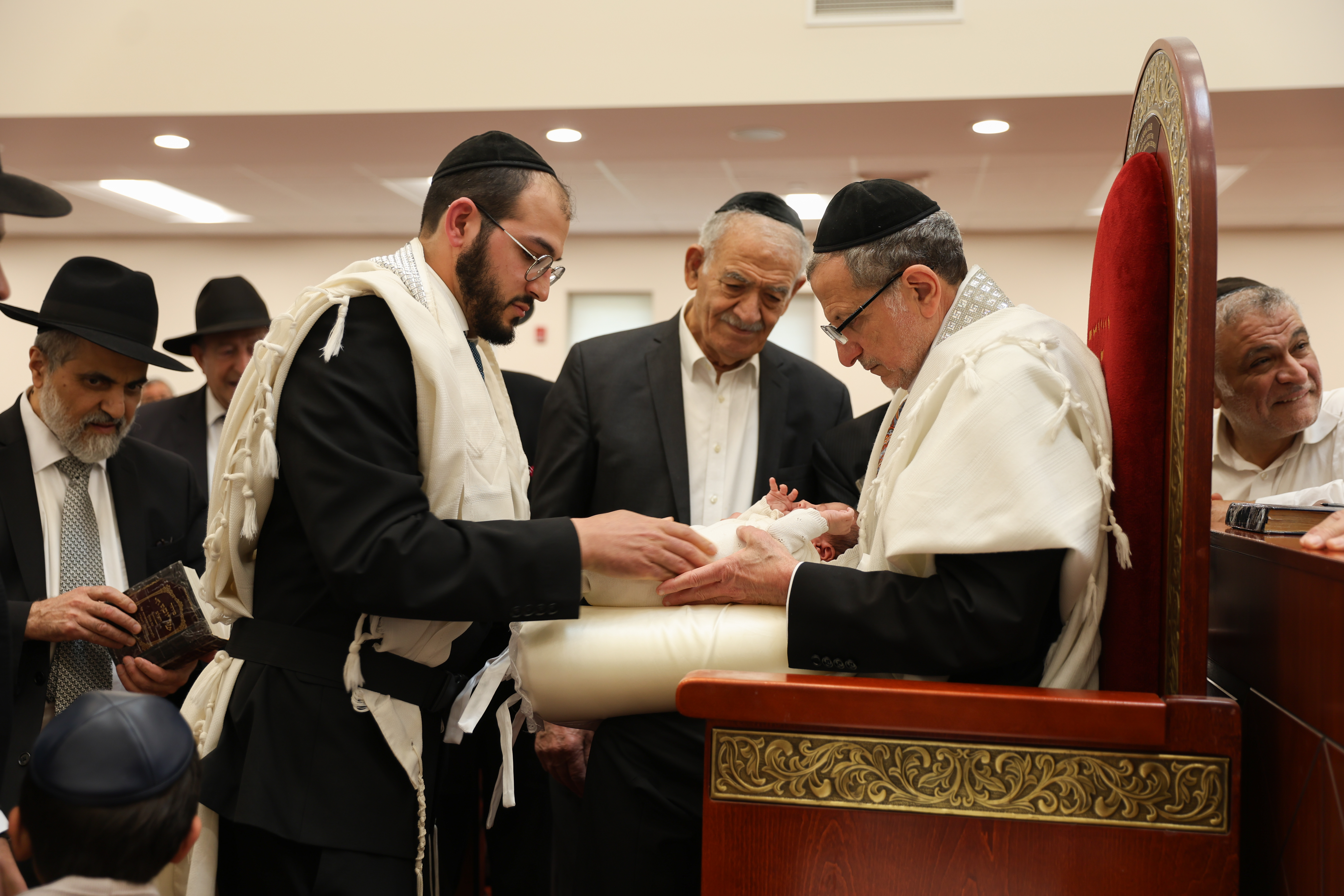
The Sandak: Godfather of the Covenant

The role of the Sandak — the one who holds the baby during the circumcision — is considered one of the greatest honors a Jew can receive. The Zohar compares the Sandak to the High Priest offering incense in the Holy Temple, calling it a form of offering to God. The Rema (R. Moshe Isserles) rules that the Sandak's knees serve as the "altar" of the covenant.

Traditionally, the honor is given to the most distinguished Torah scholar present. The custom of having a grandfather serve as Sandak is widely practiced. Some communities follow the Arizal's opinion that the same person should not be Sandak for two brothers.

Sources:

Zohar, Lech Lecha · Rema, Y.D. 264:1 · Magen Avraham 136:4 · Kaf HaChaim

🪑
Kabbalah & Mysticism

Elijah's Chair: The Prophet at Every Bris

At every Bris Milah, an ornate chair is set aside for the Prophet Elijah (Eliyahu HaNavi), known as the "Angel of the Covenant" (Malach HaBrit). This ancient custom originates from the Midrash, which recounts that Elijah declared the Jewish people had abandoned the covenant. God commanded him to be present at every Bris as witness that His people remain faithful.

The chair is typically placed to the right side. The Sandak first sits in Elijah's chair, symbolically sharing the seat with the prophet, before the baby is placed on his knees. This custom is universal across virtually all Jewish communities, Ashkenaz and Sephardic alike.

Sources:

Pirkei d'Rabbi Eliezer 29 · Zohar, Vayakhel · Aruch HaShulchan Y.D. 265:24

✍️
Name & Identity

The Baby's Name: A Soul Revealed

The naming of a Jewish boy at his Bris is among the most spiritually charged moments of the ceremony. The Arizal (R. Yitzchak Luria) taught that parents receive a form of divine inspiration (ruach hakodesh) when choosing their child's name — a glimpse into the soul that has entered the world. The name given to a boy at his Bris is considered the vessel through which his divine mission will unfold.

Ashkenazic Jews traditionally name after deceased relatives to honor their memory and carry their legacy forward. Sephardic Jews often name after living grandparents as an expression of honor. The Hebrew name given at the Bris is the name used in all religious and legal contexts throughout life.

Sources:

Zohar, Emor · Sefer HaGilgulim, Arizal · Responsa, Chatam Sofer O.C. 163

✍️

More Articles Coming Soon

Topics include: Priah and Metzitza in Halacha · The Bris of Avraham Avinu · Shabbat and Bris: When Pikuach Nefesh Overrides · The Seudah of the Bris

Suggest a Topic